
Keywords
[IN]VISIBLE MEANING
Artistic Communication
Meaning in Art
Artistic Narrative
Photography
Philosophy
(IN)VISIBLE MEANING
Keywords [IN]VISIBLE MEANING Artistic Communication Meaning in Art Artistic Narrative Photography Philosophy (IN)VISIBLE MEANING
[IN]VISIBLE MEANING is an ongoing, research-driven photography and installation project initiated by Mansour Forouzesh in 2020. Situated at the intersection of visual arts, narrative theory, and philosophy, the project investigates how meaning is produced through the dynamic relationship between the artist, the artwork, and the viewer. Drawing on philosophical frameworks such as Plato’s Allegory of the Cave, the work questions whether meaning resides within the image itself, the artist’s intention, or the perceptual and interpretive act of the audience.
Rather than proposing fixed or didactic interpretations, (IN)VISIBLE MEANING constructs open narrative and visual structures that invite personal reflection and emotional engagement. Through photography, video, and installation, the project examines how meaning emerges from absence, ambiguity, and lived experience, emphasizing the fragile, subjective, and often illusory nature of perception. Developed as a long-term artistic and research framework since 2020, the project has been presented through multiple exhibitions and publications, evolving from an experimental artistic practice into a formally articulated field of inquiry within contemporary visual arts.

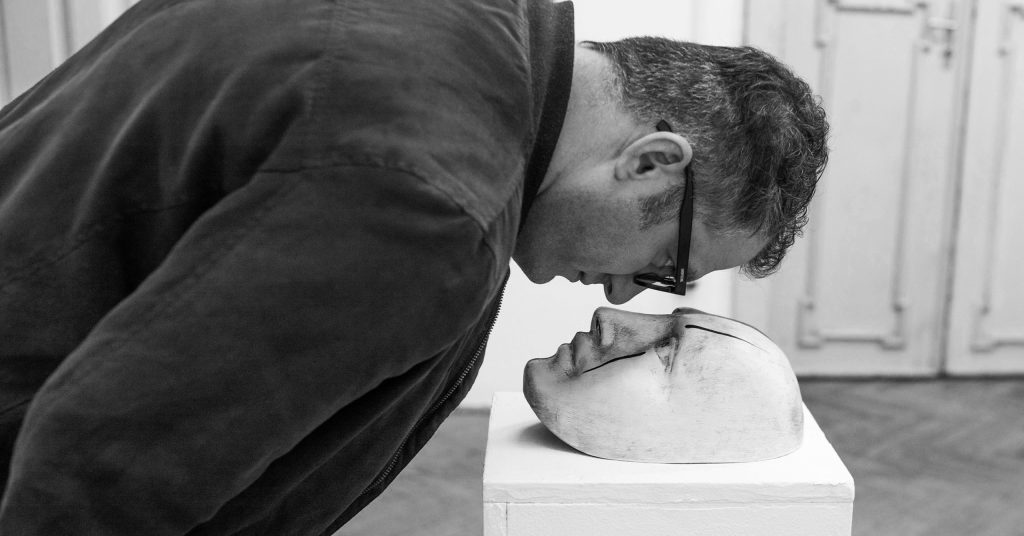
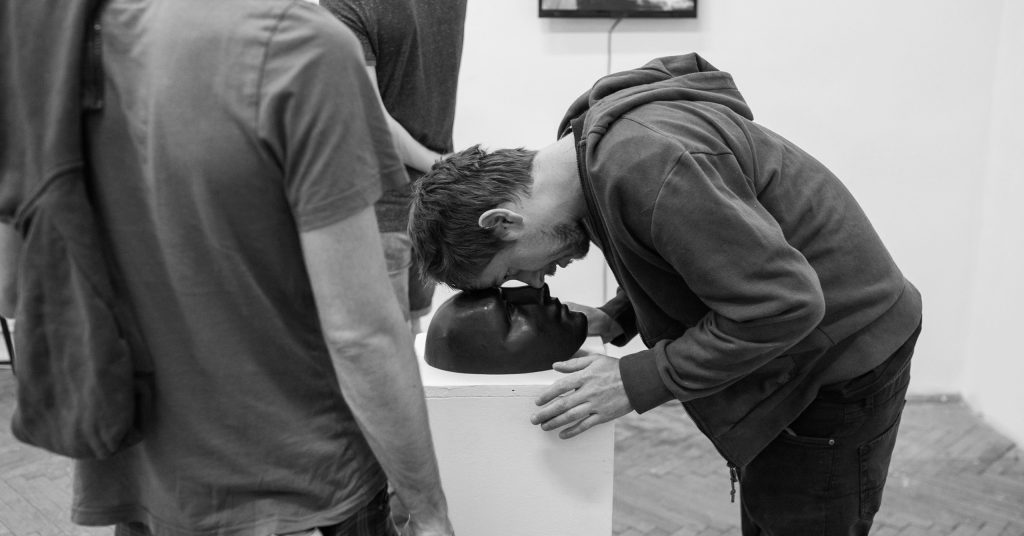
[IN]VISIBLE MEANING is a research-based artistic project initiated by Mansour Forouzesh in 2020, exploring how meaning is constructed, perceived, and interpreted within visual experience. At its core lies a dialogical process: a dynamic exchange between artist, artwork, and audience. Artistic communication, in this view, is neither linear nor singular, but shaped by a complex interplay of philosophical, psychological, and social forces. Meaning does not reside solely within the image, nor is it fully controlled by the artist; instead, it emerges in the relational space between these three elements, activated through the viewer’s engagement.
The project originates from a fundamental inquiry: How do we understand meaning? Is meaning grounded in transcendental truths, or does it arise through perception, context, and lived experience? Using photography as its primary medium, [IN]VISIBLE MEANING investigates how images—particularly those not constructed through conventional narrative strategies—can nevertheless evoke strong emotional and intellectual responses. Within this framework, photographs do not function as carriers of fixed messages, but as sites of projection, where memory, mood, and cultural conditioning converge.
Influenced by philosophical and poetic metaphors such as Plato’s Allegory of the Cave and Rumi’s parable of the elephant in the dark room, the project foregrounds perception as inherently partial and subjective. These narratives point to the fragmentary nature of seeing, suggesting that understanding is formed not through total vision but through the interpretation of incomplete and often ambiguous impressions. Similarly, in [IN]VISIBLE MEANING, each viewer assembles their own narrative, shaped by individual perspective, emotional state, and personal history.
A central concern of the project is therefore narrative, understood not as linear storytelling but as a structural and conceptual space—an interface between information and emotion. Visual composition operates as a form of silent rhetoric, binding the artist’s intention to the viewer’s interpretive act without dictating meaning. Within this space, narrative remains open, emergent, and contingent.
Rather than delivering didactic or resolved interpretations, [IN]VISIBLE MEANING presents open-ended visual encounters. Through interconnected photographic series, video works, and immersive installations, the project invites reflection on the conditions under which meaning is formed, rather than on any singular content. By encouraging viewers to pause, observe, and project their own associations, interpretation becomes a co-creative act.
Since its initiation in 2020, [IN]VISIBLE MEANING has been presented through multiple exhibitions and contexts, including solo exhibitions in Iran (2022) and Budapest (2023), as well as group exhibitions such as ABSENCE – PRESENCE at 2B Gallery, Budapest (2023) and SnapShot of a Question at Feszty Ház, Hungarian University of Fine Arts (2024), where the related work [NON]SENSE was exhibited. These presentations situate the project within diverse cultural and institutional frameworks, allowing its conceptual questions to be tested across different audiences and spatial conditions.
In parallel with its exhibition life, the project has been developed and articulated through academic collaborations and artistic research platforms, including participation in the Erasmus+ Blended Intensive Programme (BIP) in Kraków, in collaboration with the Jan Matejko Academy of Fine Arts in Kraków, HDK-Valand – Academy of Art and Design at the University of Gothenburg, and the Doctoral School of the Hungarian University of Fine Arts. These exchanges focused on contemporary artistic research methodologies and resulted in the publication Perception and (Re)Action (Budapest, 2024). Further academic engagement with the project has taken place at the Hungarian University of Fine Arts and the West University of Timișoara, where the work has contributed to discussions on metaphor, perception, and narrative in visual arts.
Ultimately, [IN]VISIBLE MEANING positions the artist as a facilitator of perception—one who does not impose meaning but constructs situations in which meaning may arise. Embracing ambiguity, uncertainty, and multiplicity, the project creates a space where the visible and invisible, the articulated and the unspoken, coexist. In doing so, it challenges viewers not only to look, but to reflect on how they see—and what they bring to the act of seeing itself.
The [IN]VISIBLE MEANING photography exhibition invites the audience to engage with a fundamental question: where does “meaning” emerge in photography? Rather than offering a fixed answer, the exhibition proposes meaning as something relational—formed through the interaction between image, space, photographer, and viewer.
The significance of this project becomes particularly evident through the presentation of two photographic series—FEAR and Comfort Zone—which were exhibited side by side in the previous iterations of the project. Although both series originate from the same artist, they differ radically in form, subject placement, and visual language, creating a productive tension that lies at the core of [IN]VISIBLE MEANING.
The FEAR photo series belongs to the still-life genre and constructs a visual narrative rooted in the photographer’s personal experience during the early stages of the Covid-19 pandemic. Shot from a fixed angle, the images focus on everyday objects and interior spaces, revealing how the photographer relates to his immediate surroundings under conditions of uncertainty, isolation, and media saturation. Rather than documenting external events, FEAR reflects an internal psychological state shaped by the constant flow of alarming information and shared global anxiety.
In this series, meaning emerges through familiarity and collective memory. As the artist explains:
“In order to show my psychological condition to the audience, I produced FEAR using a familiar and understandable visual language. The audience’s relationship with these photographs is shaped by shared experiences between myself and the viewers. I communicate through fear—not as a personal emotion alone, but as a language rooted in our common lived experience.”
The shared condition of the pandemic allows the audience to recognize themselves within the images. Meaning is not embedded solely in the objects photographed, but in the emotional resonance they carry for those who lived through the same moment in time.
By contrast, the Comfort Zone series adopts a black-and-white documentary approach, shifting the focus from interior psychological space to the external reality of urban life. Through photographs of city environments, the series explores the contradictions inherent in contemporary urban living. Here, the camera observes rather than stages, capturing fragments of everyday life shaped by architecture, infrastructure, and social behavior.
Explaining this body of work, the artist reflects:
“We are constantly caught in contradictory interpretations of meaning in life. Cities promise prosperity, comfort, and opportunity, and we move toward them in search of a better future. Yet the very structures meant to support us often shape our lives in ways that are restrictive, exhausting, and emotionally draining. I believe this contradiction stems from our incomplete understanding of concepts such as welfare, comfort, and the ‘comfort zone’ itself—an imbalance that traps us in a vicious emotional cycle.”
Although the method of image-making in Comfort Zone differs significantly from FEAR, the audience still seeks a meaningful connection with the photographs. However, this time the interaction does not rely on a consciously shared experience or a pre-designed emotional code. Instead, meaning emerges through the viewer’s interpretation of real-world scenes, filtered through their own emotional memory, personal history, and lived experience of urban environments.
In the most recent exhibition of the [IN]VISIBLE MEANING project, Comfort Zone was presented in a warehouse located within an old building in Budapest. Originally designed as a storage space rather than a social or cultural venue, the warehouse played a crucial role in reinforcing the conceptual framework of the exhibition. The choice of location emphasized the tension between function, comfort, and human presence—central concerns of the series itself.
The audience encountered the photographs in an abandoned section of the building that had remained unused for decades. With its low ceiling, damp walls, broken wooden floors, and layers of dust, the space resisted the conventional expectations of a gallery environment. Rather than offering comfort, it placed viewers under subtle physical and psychological pressure, mirroring the themes explored in the images.
The interaction between the photographs and the architectural space created a heightened sensory experience. Images depicting life in urban environments were confronted by a setting that embodied discomfort, confinement, and decay—transforming the act of viewing into a bodily experience rather than a purely visual one.
As one visitor, Laura, described:
“The Comfort Zone exhibition space created an inescapable feeling that reminded me of what we constantly experience in big cities. I enjoyed looking at the photographs, but at the same time, the pressure created by the dark space and the low ceiling felt like a metaphor for urban life itself. Cities attract us with their resources and opportunities, yet unconsciously they can also become painful and difficult spaces to inhabit.”
Through this dialogue between image, space, and audience, [IN]VISIBLE MEANING reveals meaning not as something immediately visible, but as something that gradually takes shape—through perception, emotion, and lived experience.


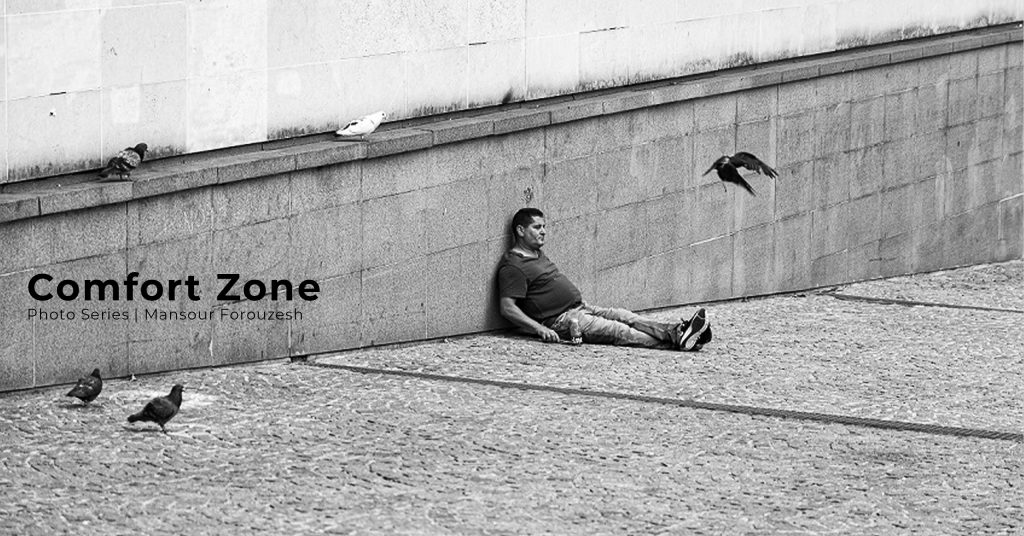
Comfort Zone is a photographic series exploring the complex relationship between individuals and urban space. Through a visual investigation of how people inhabit and are shaped by the built environment, the work reflects on themes of visibility, displacement, and belonging within the modern city. Influenced by spatial theory and phenomenology, the series frames architecture not as a neutral backdrop but as a political and emotional landscape that encodes social structures and influences human behavior.
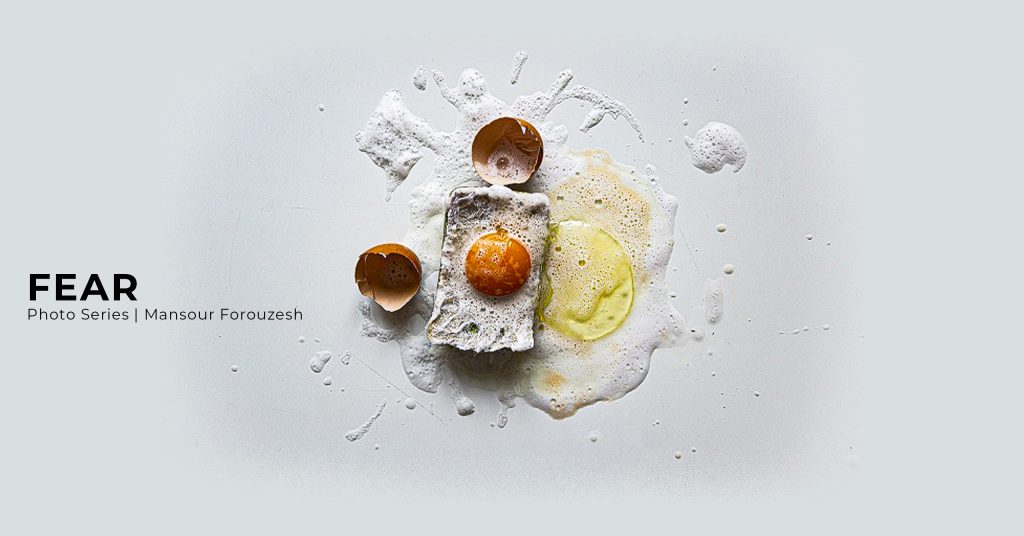
The FEAR Photo Series comprises 12 photos taken during quarantine days of the pandemic. The series highlights the impact of media and news related to the coronavirus in our everyday life. Next to all photos, we see a lead written by important international media.
In addition to the media, the politicians’ words in their everyday speech would influence people’s lives. Although the media’s efforts worldwide create a collective awareness, this awareness could transform into social fear in times of crisis and catastrophes.

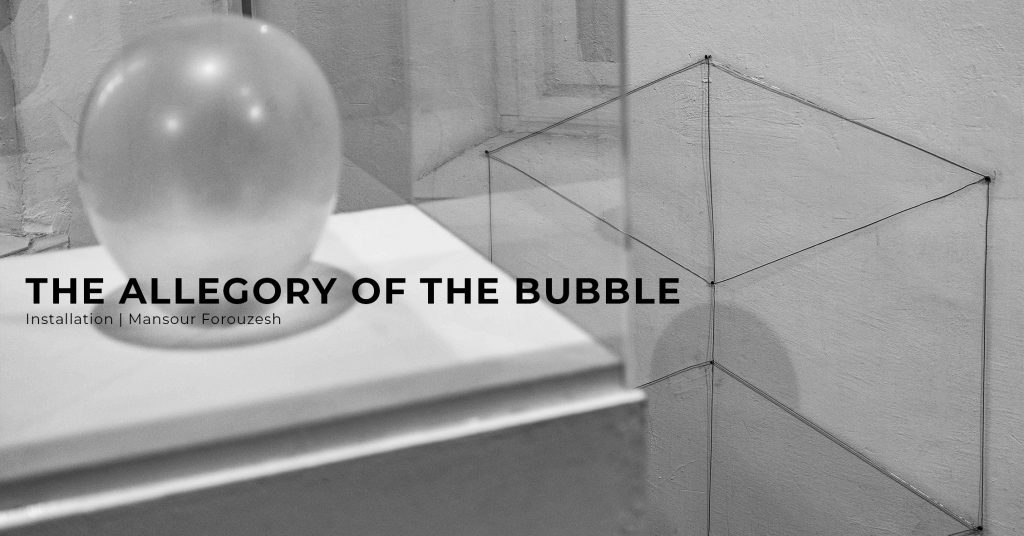
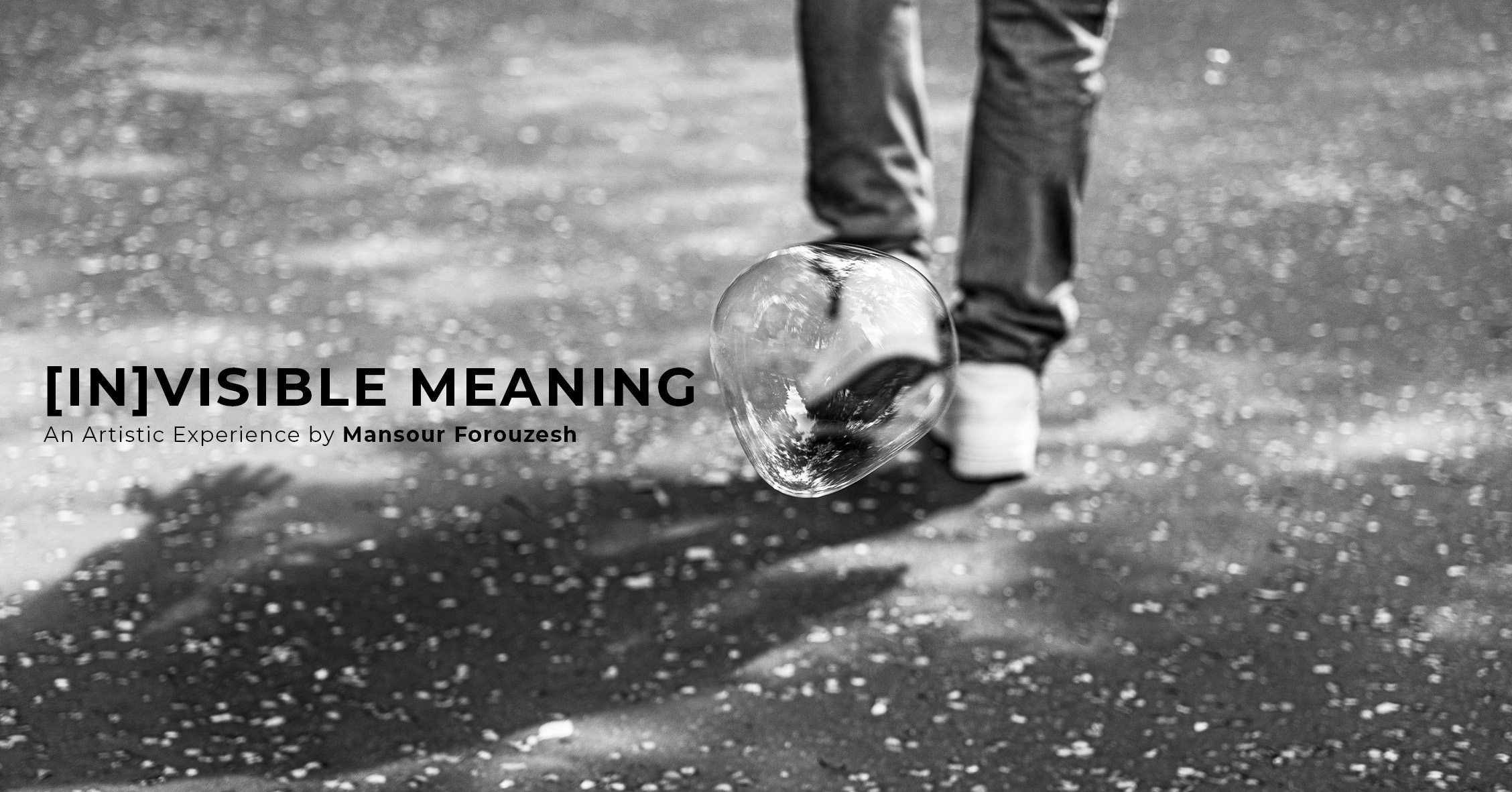
The Allegory of the Bubble, exhibited at 2B Gallery in Budapest as part of The Presence and Absence group exhibition, explores the tension between perception and reality. Through a sequence of three photographs showing a bubble seemingly bursting on a distant rod—and a sculptural installation using a balloon, wire, and shadow—the work challenges visual assumptions and reflects on the fleeting nature of existence.
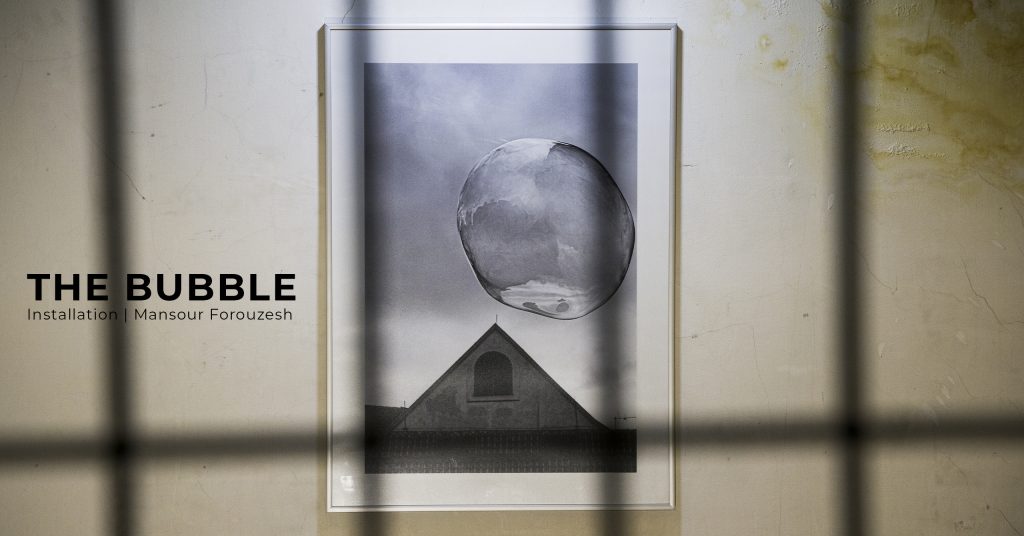
The Bubble is a photographic installation that captures a soap bubble suspended near the sharp tip of a pole—frozen in a moment of fragile tension. Displayed behind a metal fence, the work creates both a visual and physical barrier, inviting the viewer to engage from a distance.
This spatial setup emphasizes themes of vulnerability, restriction, and emotional detachment.

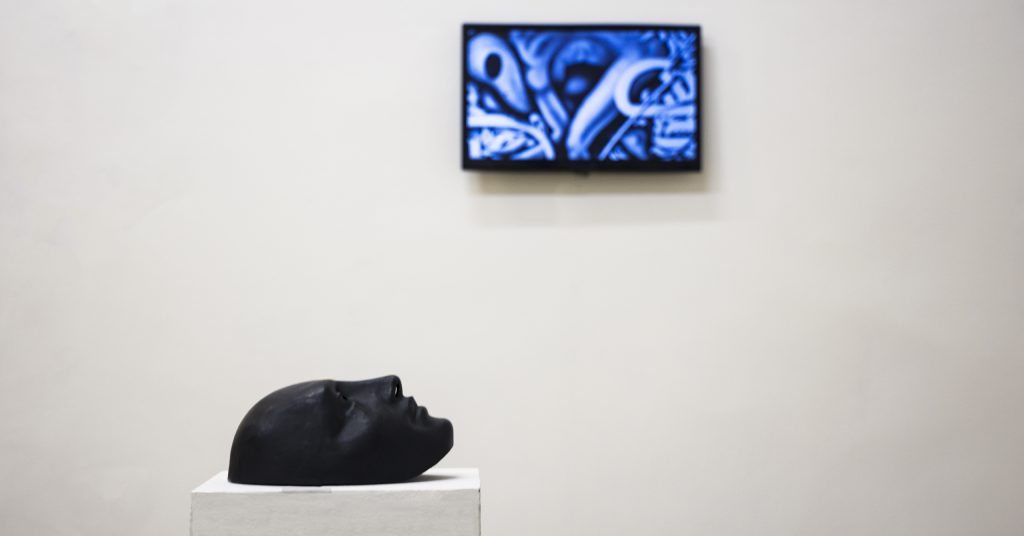
[NON]SENSE is a multi-layered art installation exploring the fragile boundary between meaning and meaninglessness through photography, video, and interactive objects. Inspired by Freud’s theory of personality, the work unfolds in three stages—Id, Ego, and Super Ego—guiding the audience from instinctive perception to critical self-reflection. Engaging both the outer and inner worlds, [NON]SENSE challenges viewers to confront their own interpretations and question the narratives they construct.



Both collections present a sense of inner dialogue and solitude as an observing outsider in a crowd. The creator of the works, similar to the viewers, is overwhelmed by the environment.
They could seek refuge in the comfortable definitions or the notion that the meanings that we are used to are no longer adequate.
The photos are dynamic and simplistic, using the power of geometric shapes, repeating rhythmical elements and strong contrasts. What we could ask ourselves instead is, what do we find resonating in the photos and what it can teach us about ourselves. After all, these could be core questions to reveal invisible meanings.
Contact: info [at] mansourforouzesh . com